
Decolorized vs natural aloe vera: what aloin means for your choice
What decolorized aloe vera is, why aloin matters, which limits buyers use (IASC, EU, Korea), and how to choose between natural and decolorized grades.
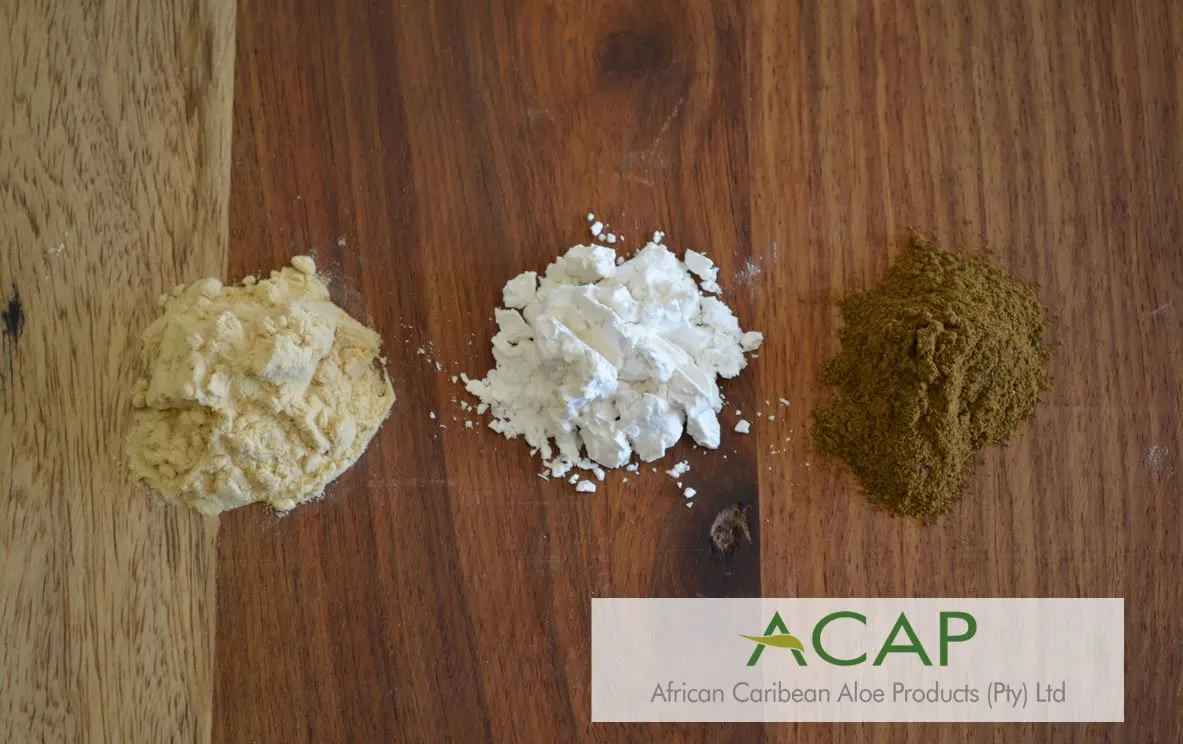
Most aloe ingredients are offered in two versions: natural (sometimes called regular or REG) and decolorized (DEC). The difference is mainly about one group of compounds, the anthraquinones, and one compound in particular: aloin. This article explains what that means for formulators and quality teams.
Where aloin comes from
The leaf of Aloe vera (Aloe barbadensis Miller) has three layers: the green rind, a thin layer of yellow latex just under the rind, and the clear inner leaf gel. The latex contains anthraquinones and related compounds, including aloin (a mix of aloin A and B, also called barbaloin). These are the compounds that give aloe latex its yellow colour and bitter taste.
The clear inner gel contains far less aloin than the latex. But during harvesting and filleting, some latex can reach the gel. Whole leaf processing, where the rind is not removed, carries much more of it.
What “decolorized” means
Decolorizing is a processing step that removes most of the anthraquinones, and with them most of the yellow colour. The common method is filtration through activated carbon. The result is a paler material with a much lower aloin content.
| Natural | Decolorized | |
|---|---|---|
| Colour | Light yellow to amber, depending on form | Paler, close to colourless in liquids |
| Aloin | Depends on plant part and processing | Reduced to a low level |
| Typical uses | Many cosmetic uses; some technical uses | Food, beverages, supplements, and cosmetics with tight specs |
Decolorizing can also reduce some other constituents. If a polysaccharide minimum matters to you, ask for both the aloin and the polysaccharide values for the decolorized grade.
The limits buyers use
There is no single worldwide limit. These are the reference points buyers most often mention:
- IASC (International Aloe Science Council) certification: aloin below 10 ppm for products intended for oral consumption. For topical products, the industry standard is 50 ppm, following the Cosmetic Ingredient Review. (Source: IASC.)
- European Union, food: Regulation (EU) 2021/468 prohibited “preparations from the leaf of Aloe species containing hydroxyanthracene derivatives” in food. In November 2024 the EU General Court annulled that part of the regulation (case T-189/21). The European Commission appealed in January 2025 (case C-38/25 P). Check the current position with your regulatory adviser before you put aloe into a food or food supplement in the EU. National rules also apply.
- Korea, functional foods (HFF): a technical document from the Ministry of Food and Drug Safety is reported to set a maximum aloin content of 10 mg/kg for aloe gel used as a functional food (HFF) raw material, together with a minimum polysaccharide content and a peel-free requirement.
- California Proposition 65: lists “aloe vera, non-decolorized whole leaf extract”. US buyers selling into California often ask for decolorized or inner leaf material for this reason.
These rules change. Use this list as a starting point for your own regulatory check, not as advice.
How to choose
| Your product | Usual choice |
|---|---|
| Drinks, food, dietary supplements | Decolorized, inner leaf, with a documented aloin value per batch |
| Leave-on cosmetics (creams, gels, serums) | Inner leaf, natural or decolorized depending on your spec and target market |
| Rinse-off cosmetics (cleansers, shampoos) | Natural inner leaf is common |
| Products where colour matters (clear gels, white creams) | Decolorized |
| Products sold as “minimally processed” | Natural inner leaf, with aloin documented |
What to ask your supplier
- Plant part: inner leaf or whole leaf?
- Aloin value per batch, the unit (ppm or mg/kg), and the test method (for example HPLC).
- Decolorizing method.
- Polysaccharide value before and after decolorizing, and its method.
- Whether the decolorized grade is also certified organic. On organic certificates, decolorized grades are often listed as separate products.
Reading a COA
On a certificate of analysis, look for a line for aloin (sometimes “aloin A + B” or “anthraquinones as aloin”), the result, the limit it is checked against, and the method. “Not detected” is only meaningful when the detection limit is stated.
ACAP grades
ACAP produces liquids, concentrate and spray-dried powders of Aloe barbadensis Miller in natural and decolorized versions, from inner leaf processed on our farm in Limpopo, South Africa. Several decolorized grades (liquid, concentrate, spray-dried powder) appear as separate organic products on our USDA NOP certification. See our ingredients or request a COA.