
Organic certifications for aloe vera ingredients
EU organic, USDA NOP and COSMOS for aloe vera ingredients: what each covers, how import certificates work, and how to check a supplier's scope.
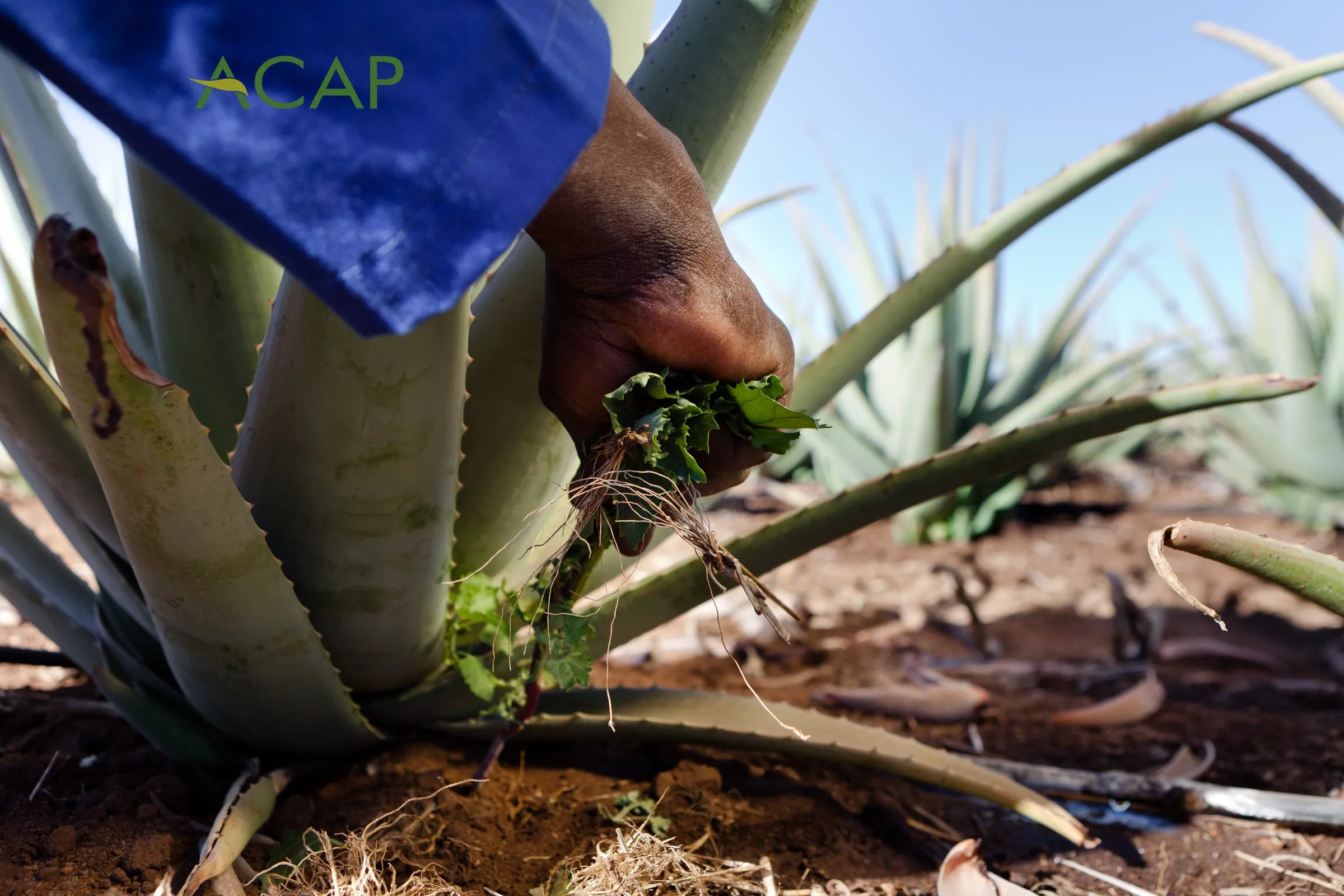
“Certified organic” on an aloe ingredient can mean several different things. A supplier may hold an EU organic certificate, a USDA organic certification, a COSMOS certificate, or several of these, and each one covers a specific list of products. This guide explains the main schemes for Aloe vera (Aloe barbadensis Miller) ingredients, and what to check before you rely on a supplier’s organic claim.
The three schemes buyers ask about
| Scheme | Who sets it | What it covers | Typical buyer |
|---|---|---|---|
| EU organic | European Union, Regulation (EU) 2018/848 | Agricultural products and processed food and feed sold as organic in the EU | EU food, supplement and cosmetic manufacturers |
| USDA Organic (NOP) | US Department of Agriculture, National Organic Program, 7 CFR Part 205 | Crops, livestock and handling of products sold as organic in the US | US manufacturers and importers |
| COSMOS | COSMOS-standard AISBL (founded by European certifiers, including Ecocert) | Organic and natural cosmetics, and raw materials for them | Cosmetic brands |
A grower outside the EU and US is certified by an approved certification body. For example, Ecocert SAS acts as an EU-recognised control body in many countries and as a USDA-accredited certifier.
EU organic
An EU organic certificate for a non-EU supplier names the operator, the control body, the activities (for example “production” for growing and “preparation” for processing), the product categories, and a list of products. Only the listed products may be sold as organic.
Import: every organic consignment entering the EU needs an electronic certificate of inspection (COI) issued in the TRACES system, by the exporter’s control body, before release at the border. Without a valid COI, the goods cannot be released as organic.
What to check:
- The certificate number and validity date.
- That “production” is included if you want a grower, not a trader.
- That your exact product is on the list. A certificate that lists “spray-dried powder” does not automatically cover “decolorized spray-dried powder” unless that is also listed.
USDA Organic (NOP)
USDA certification is recorded in the public Organic Integrity Database. Each operation has an ID, a status (for example “Certified”), a certifier, and lists of certified crops and handled products.
NOP certification has no fixed expiry date. It stays valid until it is surrendered, suspended or revoked, and the operation must complete an annual update with its certifier. Always check the live database, not only a PDF.
Import: since the Strengthening Organic Enforcement rule, organic products imported into the US need an NOP Import Certificate for each shipment, generated by the exporter’s certifier in the Organic Integrity Database. The importer declares it to US Customs.
What to check:
- Operation status “Certified” in the database.
- Your product listed under handling.
- The scope: “Crops” means the operator grows; “Handling” means it processes or trades.
COSMOS
COSMOS has two levels for finished cosmetics, COSMOS ORGANIC and COSMOS NATURAL, and separate statuses for raw materials:
- COSMOS CERTIFIED: raw materials with organic content.
- COSMOS APPROVED: raw materials allowed in COSMOS products without organic content.
Both have public databases. If you are building a COSMOS product, check that your aloe raw material is listed in the COSMOS raw-material database, or that it is an agro-ingredient certified organic under a recognised standard, as the COSMOS rules allow. A COSMOS certificate for a finished product made by your supplier does not make their bulk raw materials COSMOS-certified.
Organic is not the same as other quality schemes
| Scheme | What it is |
|---|---|
| IASC certification | Aloe-specific quality and authenticity scheme from the International Aloe Science Council |
| Food safety (FSSC 22000, BRCGS, IFS, GFSI-benchmarked schemes) | Food safety management, not organic status |
| Kosher, Halaal | Religious compliance for named products |
| Fair trade or ethical sourcing (Fair for Life, UEBT) | Social and sourcing standards |
A buyer may need several of these at once. Ask for each certificate separately.
A five-minute supplier check
- Ask for the certificate PDFs.
- Check the operator name and site address match the supplier you are buying from.
- Check each product you plan to buy is listed by name.
- Check validity: an expiry date for EU organic; live status in the Organic Integrity Database for NOP.
- Agree how the import certificate (EU COI or NOP Import Certificate) will be issued for each shipment.
ACAP’s organic certification
African Caribbean Aloe Products (ACAP) grows and processes Aloe barbadensis Miller at Iphofolo Game Farm, Vivo, Limpopo, South Africa.
- EU organic: Ecocert SAS (ZA-BIO-154), certificate ZA-BIO-154.710-0000086.2026.003, production and preparation, valid to 31 March 2027.
- USDA NOP: Ecocert SAS, Operation ID 7880216720, crops and handling. Check the live status.
- COSMOS Organic: Ecocert Greenlife, certificate 216720/92/211020250924, covering ten named Curaloe finished products. It does not cover our bulk raw ingredients.
Full scope lists are on our quality and certifications page.