
Using aloe vera in cosmetic formulation
How formulators use aloe vera liquid, 10:1 concentrate and 200x powder in skin and hair care: INCI names, usage, pH, preservation and label rules.
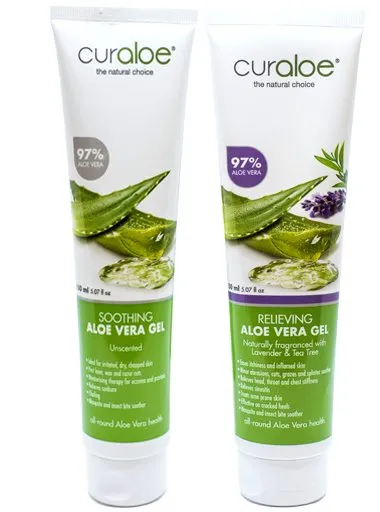
Aloe vera (Aloe barbadensis Miller) is one of the most widely used botanical ingredients in skin and hair care. It appears in gels, creams, lotions, cleansers, masks, shampoos, conditioners and after-sun products. This guide covers the practical side: which form to choose, how to work it into a formula, and what your label and claims need to respect.
Which form to use
| Form | INCI (typical) | When to choose it |
|---|---|---|
| Liquid 1:1 | Aloe Barbadensis Leaf Juice | You want aloe as a large part of the water phase, for example in a gel with a high aloe content |
| Concentrate 10:1 | Aloe Barbadensis Leaf Juice | You want a lower dose rate and less water to ship and store; dilute in the water phase |
| Spray-dried powder 200:1 or 100:1 | Aloe Barbadensis Leaf Juice Powder | You want the lowest freight cost, long storage, or an anhydrous or powder product |
Check the INCI name on your supplier’s technical data sheet. If a powder contains a carrier such as maltodextrin, the carrier must also appear in your ingredient list.
Working it into a formula
Water phase. All three forms go into the water phase. Powder dissolves best when sprinkled slowly into water under stirring at room temperature. Hydrate gums or polymers before or after the aloe according to your process; aloe solids can affect the viscosity of some thickeners.
Equivalent content. To reach the equivalent of a given percentage of single-strength aloe, divide by the ratio. For example, the equivalent of 20% aloe juice is 2% of 10:1 concentrate or 0.1% of 200x powder. See powder ratios explained.
pH. Aloe liquids are mildly acidic. Most formulas still need pH adjustment to their own target. Measure after adding aloe.
Heat. Avoid long exposure to high temperatures. Add aloe in the cool-down phase of an emulsion where your process allows.
Preservation. Aloe adds sugars and other nutrients to the water phase. Your preservative system has to protect the finished product, regardless of the preservative already in the aloe raw material. Run a challenge test (preservative efficacy test) on the final formula.
Colour and odour. Natural grades can give a slight yellow tint and a vegetal odour, especially at high levels. For clear gels and white creams, a decolorized grade is often easier. See decolorized vs natural aloe.
Stability. Run stability tests at the aloe level and grade you will use in production. Changing from liquid to powder, or from natural to decolorized, is a formula change.
Typical product types
| Category | Examples |
|---|---|
| Face care | Gels, toners, day and night creams, masks, cleansers |
| Body care | Body gels, lotions, body butters, scrubs, shower gels |
| Sun care | After-sun gels and lotions |
| Hair care | Shampoos, conditioners, styling gels |
| Hand care | Hand creams, hand washes |
| Professional | Spa and salon products, hotel amenities |
Claims and labelling
In the EU, cosmetic claims must meet the common criteria of Regulation (EU) No 655/2013: legal compliance, truthfulness, evidential support, honesty, fairness and informed decision-making. A practical consequence: naming an ingredient (“with aloe vera”) is different from claiming a product effect (“soothes skin”). An effect claim must be supported by evidence for the finished product, not only by the reputation of the ingredient. The UK, the US and other markets have their own rules, and in many markets a claim that sounds medical turns a cosmetic into a medicine.
Other label points:
- Percentages. If you state an aloe percentage on pack, define it clearly: percentage of aloe juice, or of aloe equivalent, or of powder.
- Organic. Only claim organic content in line with the scheme you follow (for example COSMOS) and the certificates of your raw materials.
- Species. If your INCI list says Aloe Barbadensis, your raw material must be Aloe barbadensis, not another aloe species. See Aloe barbadensis vs Aloe ferox.
Documents to request from your aloe supplier
- Technical data sheet with INCI name, ratio and preservative
- Safety data sheet
- Certificate of analysis per batch (including microbiology)
- Organic certificate listing the grade, if you make an organic claim
- Statements your market needs (allergens, animal testing, vegan, origin)
ACAP for cosmetic manufacturers
ACAP supplies liquid 1:1, concentrate 10:1 and spray-dried powder of Aloe barbadensis Miller, grown and processed on our certified-organic plantation in Limpopo, South Africa. Brands without their own formulation team can start from our white-label range or develop a private-label product with us.